Advanced Analytical Methods for Biochemical and Molecular Characterization
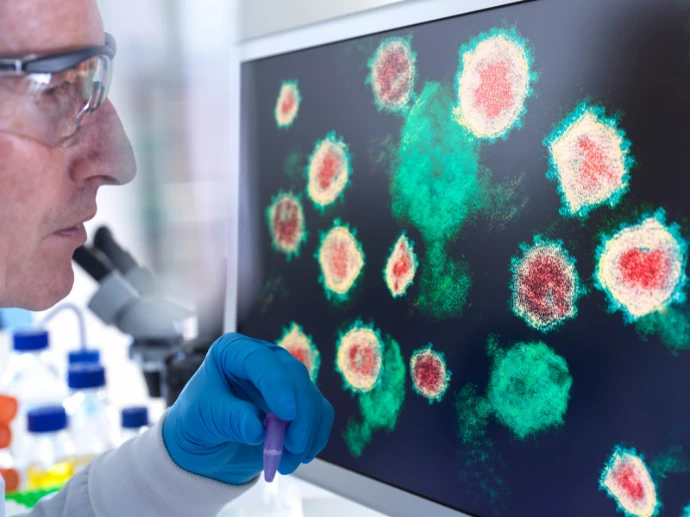
Integrating Analytical Technologies for Advanced Biochemical Investigation
The characterization of biological molecules and biochemical systems requires reliable analytical methods capable of identifying molecular components, evaluating chemical properties, and investigating biological interactions. Advances in analytical chemistry, molecular biology, and biochemical instrumentation have significantly expanded the possibilities for examining complex biological samples.
Analytical characterization combines experimental measurements, molecular identification, and quantitative evaluation to provide detailed information about biological and chemical systems. These approaches are essential for investigating proteins, nucleic acids, metabolites, enzymes, and other molecular components involved in cellular functions.
The integration of complementary analytical techniques allows researchers to examine molecular structures, monitor biochemical reactions, and investigate changes in biological activity under different experimental conditions.
1. Fundamentals of Biochemical Characterization
Biochemical characterization focuses on identifying and evaluating the molecular components responsible for biological functions. It involves the investigation of proteins, carbohydrates, lipids, nucleic acids, metabolites, and enzymatic systems.
Each molecular category requires appropriate analytical strategies depending on its chemical properties and biological role.
Protein characterization, for example, may involve evaluating molecular weight, structural properties, concentration, and enzymatic activity. Metabolite analysis focuses on identifying small molecules and examining their variations within biological samples.
The selection of analytical methods depends on several factors, including sample composition, detection sensitivity, molecular stability, and experimental objectives.
1.1 Protein Analysis and Molecular Identification
Proteins perform essential functions in biological systems, including enzymatic catalysis, molecular transport, cellular communication, and structural organization.
Protein characterization involves several complementary methodologies:
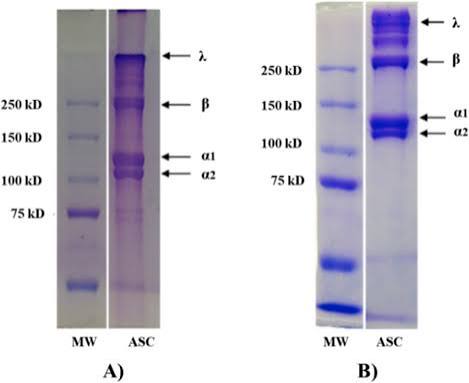
Sodium dodecyl sulfate-polyacrylamide gel electrophoresis for protein separation according to molecular weight.
Western blotting for the detection of specific proteins.
Enzyme-linked immunosorbent assays for quantitative protein measurements.
Mass spectrometry for protein identification and characterization.
Enzymatic activity assays for evaluating functional properties.
Combining these techniques provides information about protein abundance, molecular identity, and biological activity.
1.2 Enzymatic Activity and Biochemical Regulation
Enzymes regulate numerous biochemical reactions by facilitating the conversion of substrates into products. Their activity can be influenced by temperature, pH, substrate concentration, inhibitors, and environmental conditions.
Enzyme kinetics provides a quantitative framework for examining catalytic properties. Parameters such as Michaelis-Menten constant and maximum reaction velocity help describe enzyme-substrate interactions.
Spectrophotometric and fluorometric assays are commonly used to monitor enzymatic reactions and evaluate changes in catalytic activity.
2. Advanced Chromatographic Techniques
Chromatography represents a fundamental analytical approach for separating individual components from complex mixtures. It relies on differences in the interactions between analytes, stationary phases, and mobile phases.
Chromatographic separation is particularly useful for investigating biological extracts, metabolic profiles, pharmaceutical compounds, and biochemical samples.
2.1 High-Performance Liquid Chromatography
High-performance liquid chromatography separates compounds according to their interactions with a stationary phase and a liquid mobile phase.
Different separation modes, including reversed-phase, normal-phase, and ion-exchange chromatography, allow researchers to investigate molecules with different chemical properties.
HPLC can be combined with ultraviolet, fluorescence, or mass spectrometric detection to improve analytical selectivity and sensitivity.
Its applications include metabolite profiling, protein analysis, amino acid quantification, and the characterization of chemical compounds.
2.2 Gas Chromatography
Gas chromatography is particularly suitable for analyzing volatile and thermally stable compounds.
The separation process depends on the volatility of analytes and their interactions with the stationary phase within a chromatographic column.
Gas chromatography is frequently applied to the analysis of volatile organic compounds, essential oil constituents, and chemical transformation products.
The coupling of gas chromatography with mass spectrometry provides additional information for compound identification through mass fragmentation patterns.
2.3 Liquid Chromatography-Mass Spectrometry
Liquid chromatography-mass spectrometry combines chromatographic separation with mass-based molecular detection.
This approach is widely used in metabolomics, pharmaceutical analysis, proteomics, and biochemical research.
It enables the investigation of complex samples containing multiple molecular components and supports the identification of compounds according to their mass-to-charge ratios.

3. Spectroscopic Methods for Molecular Characterization
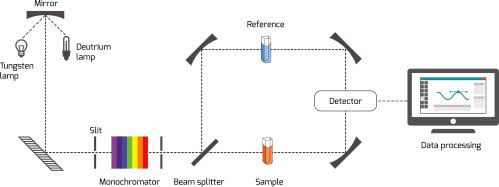
Spectroscopic techniques investigate the interaction between electromagnetic radiation and matter. They provide information about molecular composition, structural properties, and chemical interactions.
3.1 Ultraviolet-Visible Spectroscopy
Ultraviolet-visible spectroscopy measures the absorption of light by molecules at specific wavelengths.
It is frequently used to quantify nucleic acids, proteins, and different chemical compounds.
The Beer-Lambert law establishes the relationship between absorbance, concentration, optical path length, and molar absorptivity.
This technique offers a practical approach for concentration measurements and monitoring biochemical reactions.
3.2 Fluorescence Spectroscopy
Fluorescence spectroscopy detects light emitted by molecules following excitation at specific wavelengths.
Its high sensitivity makes it useful for investigating molecular interactions, enzyme activity, cellular components, and fluorescently labeled biological structures.
Fluorescent probes can also be used to investigate intracellular parameters, including reactive oxygen species production and changes in cellular environments.
3.3 Fourier Transform Infrared Spectroscopy
Fourier transform infrared spectroscopy identifies molecular vibrations associated with specific chemical bonds.
The resulting infrared spectra provide characteristic absorption bands that can support the identification of functional groups and chemical structures.
FTIR is applied to the characterization of proteins, lipids, polymers, biological materials, and chemical compounds.
4. Molecular Biology Techniques and Genetic Characterization
Molecular biology methodologies allow researchers to investigate genetic material, gene expression, and molecular regulation.
These approaches provide complementary information to biochemical and analytical measurements.
4.1 Polymerase Chain Reaction
Polymerase chain reaction is used to amplify specific DNA sequences through repeated cycles of denaturation, primer annealing, and extension.
This technique supports molecular identification, genetic analysis, and the investigation of specific DNA regions.
4.2 Quantitative Real-Time PCR
Quantitative real-time PCR enables the monitoring of DNA amplification through fluorescent signals.
When applied to reverse-transcribed RNA samples, RT-qPCR allows the quantitative investigation of gene expression.
Relative expression analysis commonly involves normalization against suitable reference genes and the application of comparative quantification methods.
This approach is particularly useful for examining molecular responses associated with oxidative stress, cellular signaling, and metabolic regulation.
4.3 Nucleic Acid Quantification and Quality Assessment
The evaluation of nucleic acid concentration and purity is an important step before molecular analysis.
Spectrophotometric measurements and fluorescence-based assays can be used to quantify DNA and RNA.
Electrophoretic methods provide additional information about nucleic acid integrity and molecular size distribution.
5. Cellular and Biochemical Assays
Cellular assays provide experimental approaches for evaluating biological responses and investigating changes in cellular functions.
These methodologies are commonly combined with analytical measurements to establish relationships between molecular mechanisms and cellular behavior.
5.1 Cell Viability Assessment
Cell viability assays evaluate cellular metabolic activity, membrane integrity, or other indicators of cellular function.
Common approaches include colorimetric, fluorometric, and luminescence-based methodologies.
The selection of an appropriate assay depends on the biological model, experimental conditions, and the specific endpoint being investigated.
5.2 Oxidative Stress Measurements
Oxidative stress analysis involves investigating the production of reactive oxygen species and the activity of antioxidant defense mechanisms.
Common measurements include:
Intracellular reactive oxygen species.
Superoxide dismutase activity.
Catalase activity.
Glutathione concentrations.
Lipid peroxidation indicators.
Protein oxidation products.
These measurements provide complementary information about cellular redox regulation and oxidative responses.
5.3 Membrane Integrity and Cytotoxicity Evaluation
Membrane integrity assays investigate changes in cellular membrane permeability and the release of intracellular components.
Lactate dehydrogenase assays are commonly used to evaluate membrane damage by measuring enzyme activity in extracellular samples.
Combining membrane integrity measurements with cellular viability assays provides a broader assessment of cellular responses.

6. Mass Spectrometry and Advanced Molecular Identification
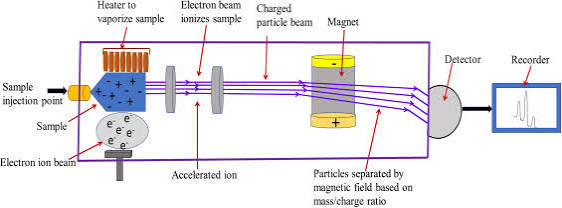
Mass spectrometry is an important analytical technology for identifying and characterizing molecules according to their mass-to-charge ratios.
The technique involves ion generation, ion separation, and detection, producing spectra that provide information about molecular composition.
Different ionization techniques, including electrospray ionization and matrix-assisted laser desorption/ionization, are selected according to the characteristics of the investigated molecules.
Tandem mass spectrometry provides additional structural information through the fragmentation of selected precursor ions.
Applications include:
Protein identification and peptide characterization.
Metabolite identification.
Lipid profiling.
Chemical composition analysis.
Investigation of metabolic transformation products.
Quantitative analysis of selected molecular compounds.
Future Perspectives in Analytical and Molecular Research
Technological developments continue to improve the sensitivity, resolution, and analytical capabilities of modern laboratory methods.
High-resolution mass spectrometry, advanced chromatography, automated sample preparation, and high-throughput molecular platforms are expanding the possibilities for investigating complex biological systems.
The development of integrated omics approaches also provides opportunities to examine biological processes at multiple molecular levels.
Combining proteomics, metabolomics, transcriptomics, and lipidomics can contribute to a more comprehensive understanding of cellular organization and biochemical regulation.
Artificial intelligence and computational analysis are also creating new possibilities for processing large analytical datasets, recognizing molecular patterns, and supporting experimental interpretation.
Conclusion
Advanced analytical methods are essential for the detailed investigation of biochemical systems and molecular structures. Chromatography, spectroscopy, mass spectrometry, molecular biology techniques, and cellular assays provide complementary approaches for examining biological samples.
The integration of these technologies supports molecular identification, quantitative analysis, biochemical characterization, and the investigation of cellular responses.
Through validated methodologies, appropriate quality control, and systematic data interpretation, analytical research continues to contribute to scientific knowledge across biochemistry, molecular biology, pharmaceutical sciences, toxicology, and biotechnology.