
Introduction to Oxidative Pathways and Xenobiotic Metabolism
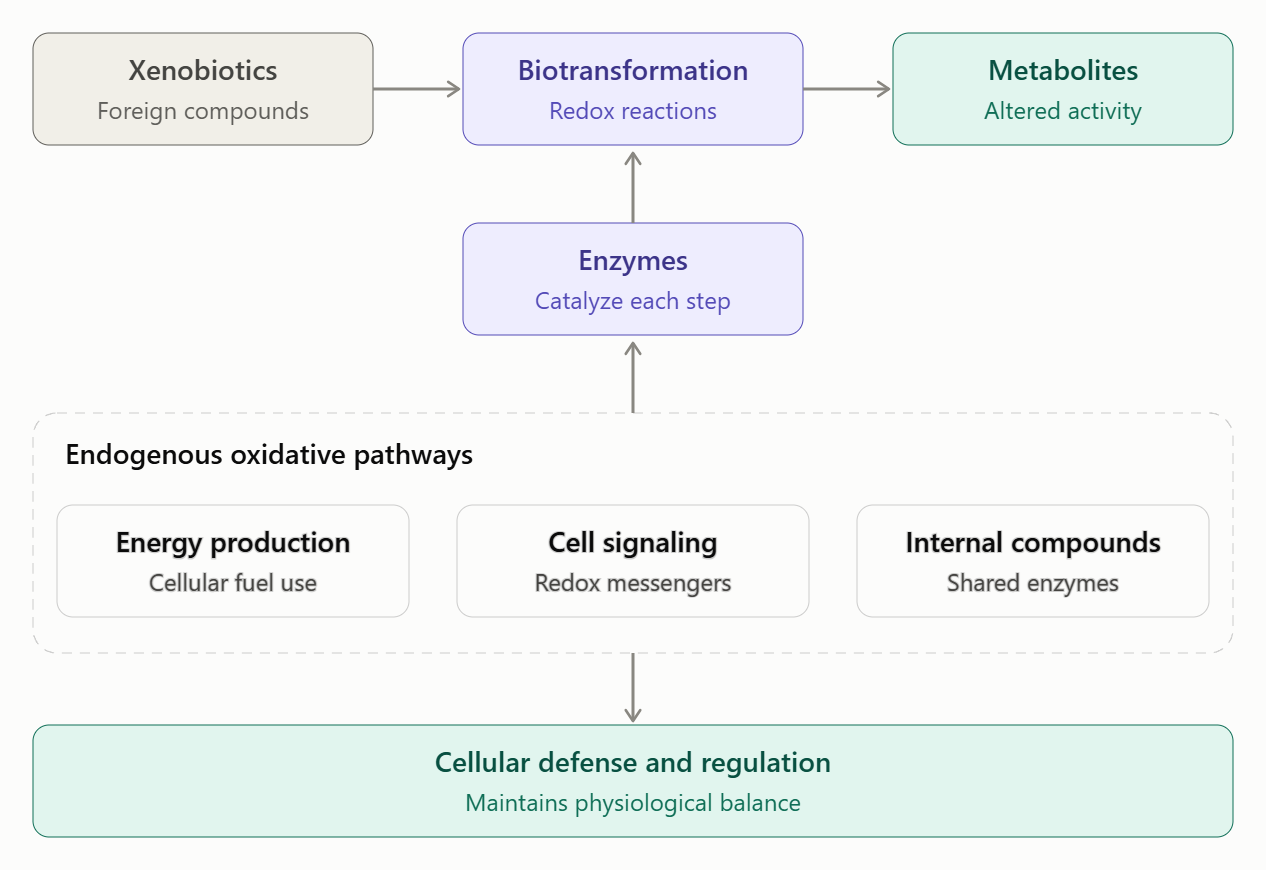
Oxidative pathways and xenobiotic metabolic transformations are fundamental subjects in biochemical research, providing insights into how biological systems process chemical compounds and regulate intracellular reactions. These interconnected mechanisms involve enzymatic activities, molecular interactions, and cellular defense systems that contribute to maintaining physiological balance.
Oxidative reactions participate in numerous metabolic processes, including energy production, cellular signaling, and the transformation of endogenous and external chemical substances. Xenobiotic metabolism, on the other hand, involves the biochemical modification of compounds that are foreign to an organism. Understanding these processes requires investigating the enzymes, molecular intermediates, and regulatory mechanisms responsible for chemical transformations.
The relationship between oxidative metabolism and xenobiotic biotransformation is particularly important because several metabolic reactions involve oxidation-reduction mechanisms. These reactions influence compound stability, biological activity, and the formation of different metabolic products.
1. Understanding Oxidative Pathways in Biological Systems
Oxidative pathways encompass a wide range of biochemical reactions involving the transfer of electrons between molecules. These reactions are essential for cellular metabolism and contribute to the regulation of several physiological functions.
Reactive oxygen species, including superoxide anions, hydrogen peroxide, and hydroxyl radicals, are generated through different cellular processes. Their production is associated with mitochondrial respiration, enzymatic reactions, and interactions with external chemical compounds.
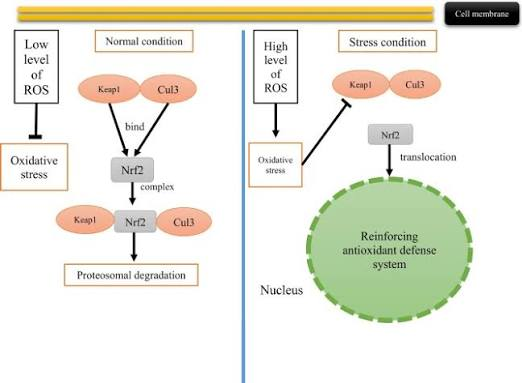
At controlled concentrations, reactive oxygen species participate in intracellular signaling and contribute to normal cellular regulation. However, excessive production or insufficient antioxidant protection may disturb cellular homeostasis and promote oxidative damage.
1.1 Sources of Reactive Oxygen Species
Several biological systems contribute to the generation of reactive oxygen species. Mitochondria represent an important source because electron leakage during mitochondrial respiration can lead to superoxide formation.
Other sources include NADPH oxidases, xanthine oxidase, and different metabolic enzymes. Environmental factors and chemical exposure may also influence the production of reactive oxygen species.
Understanding these sources helps researchers investigate the relationship between cellular metabolism, oxidative regulation, and biochemical responses.
1.2 Oxidative Stress and Cellular Homeostasis
Oxidative stress occurs when the production of reactive oxygen species exceeds the capacity of antioxidant defense mechanisms. This imbalance can affect cellular structures and modify several biochemical functions.
Lipid peroxidation represents one important consequence of oxidative damage, involving the oxidation of polyunsaturated fatty acids in biological membranes. Protein oxidation may alter enzyme activity and structural stability, while oxidative modifications of nucleic acids can influence genetic material.
The evaluation of oxidative stress therefore requires several complementary biochemical measurements rather than relying on a single indicator.
2. Antioxidant Defense Mechanisms
Biological systems possess multiple antioxidant mechanisms that regulate reactive oxygen species and limit oxidative damage. These mechanisms include enzymatic and non-enzymatic defense systems.

2.1 Superoxide Dismutase Activity
Superoxide dismutase catalyzes the conversion of superoxide anions into hydrogen peroxide and molecular oxygen. This reaction represents an important initial step in the enzymatic regulation of reactive oxygen species.
Different forms of superoxide dismutase are present in specific cellular compartments, allowing antioxidant protection across different biological environments.
2.2 Catalase and Hydrogen Peroxide Regulation
Catalase contributes to antioxidant defense by converting hydrogen peroxide into water and oxygen. Its activity is particularly important in preventing excessive accumulation of hydrogen peroxide.
Glutathione peroxidases also participate in hydrogen peroxide regulation and contribute to the reduction of lipid hydroperoxides.
2.3 Glutathione and Cellular Redox Balance
Glutathione is an important intracellular antioxidant involved in maintaining cellular redox balance. It participates in enzymatic detoxification reactions and protects cellular components against oxidative modifications.
The ratio between reduced glutathione and oxidized glutathione is frequently investigated as an indicator of intracellular redox status.
3. Xenobiotic Metabolism and Biochemical Transformation
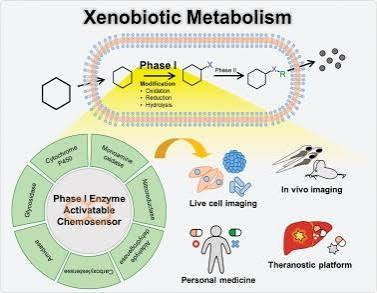
Xenobiotic metabolism describes the enzymatic processes through which organisms chemically modify foreign substances. These transformations can influence the solubility, distribution, biological activity, and elimination of chemical compounds.
The liver is a major organ involved in xenobiotic metabolism because it contains numerous enzymes responsible for chemical biotransformation. However, metabolic transformations also occur in other tissues and biological compartments.
Xenobiotic metabolism is generally divided into three interconnected phases.
3.1 Phase I: Functionalization Reactions
Phase I reactions introduce or expose functional groups within chemical structures. These transformations commonly include oxidation, reduction, and hydrolysis.
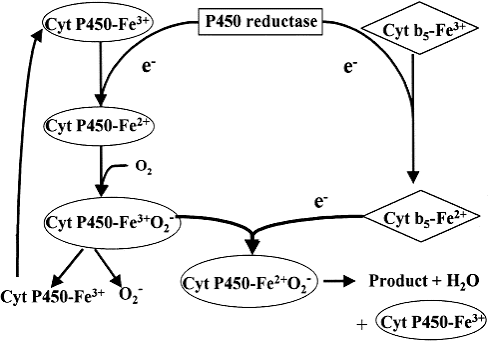
Cytochrome P450 enzymes represent an important family of proteins involved in oxidative biotransformation. They catalyze reactions that modify different classes of chemical compounds and contribute to the formation of intermediate metabolites.
Phase I reactions may increase molecular polarity or prepare compounds for subsequent metabolic transformations. Nevertheless, some reactions can also generate reactive intermediates depending on the chemical structure and metabolic pathway involved.
3.2 Phase II: Conjugation Reactions
Phase II metabolism involves the conjugation of chemical compounds or their metabolites with endogenous molecules. These reactions generally increase water solubility and facilitate subsequent elimination.
Important conjugation mechanisms include:
Glucuronidation through UDP-glucuronosyltransferases.
Sulfation through sulfotransferases.
Glutathione conjugation through glutathione S-transferases.
Acetylation through N-acetyltransferases.
Methylation through different methyltransferase enzymes.
These pathways contribute to the chemical modification and metabolic processing of xenobiotic compounds.
3.3 Phase III: Transport and Elimination
Phase III processes involve the transport of metabolites across cellular membranes and their subsequent elimination.
Transport proteins, including ATP-binding cassette transporters and solute carrier transporters, participate in the movement of chemical substances and metabolic products.
These mechanisms contribute to the elimination of compounds through biological routes such as urine and bile.
4. Cytochrome P450 Enzymes and Oxidative Biotransformation
Cytochrome P450 enzymes play a central role in the metabolism of numerous xenobiotic compounds. These heme-containing proteins catalyze oxidation reactions through the activation and transfer of molecular oxygen.
Different CYP enzymes exhibit distinct substrate specificities and tissue distributions. CYP3A4, CYP2D6, CYP2C9, CYP1A2, and CYP2E1 are examples of enzymes involved in the metabolism of various chemical substances.
Their activity can be influenced by genetic variations, enzyme induction, enzyme inhibition, and interactions between different compounds.
Investigating cytochrome P450 activity provides valuable information about metabolic pathways, chemical interactions, and the formation of intermediate products.
5. Interactions Between Oxidative Stress and Xenobiotic Metabolism
Oxidative pathways and xenobiotic metabolism are closely interconnected. Several xenobiotic transformation reactions involve oxidative enzymes, while certain metabolic processes may influence intracellular redox balance.
The formation of reactive metabolites can contribute to oxidative modifications when cellular antioxidant systems are insufficient to maintain homeostasis.
Furthermore, oxidative stress can influence enzyme activity, membrane integrity, and intracellular signaling pathways involved in metabolic regulation.
Understanding these relationships requires examining both chemical transformations and biological responses under controlled experimental conditions.
6. Experimental Approaches for Investigating Oxidative and Metabolic Pathways
The investigation of oxidative pathways and xenobiotic metabolism relies on complementary analytical, biochemical, and molecular methodologies.
6.1 Chromatographic Techniques
Gas chromatography and high-performance liquid chromatography are widely used to separate chemical compounds and examine complex sample compositions.
When combined with mass spectrometry, these methods provide information about molecular masses, fragmentation patterns, and chemical identities.
These analytical approaches are particularly useful for investigating xenobiotic metabolites and evaluating changes in chemical profiles.
6.2 Measurement of Oxidative Stress Biomarkers
Several biochemical assays can be used to investigate oxidative status and antioxidant activity.
Common experimental indicators include:
Superoxide dismutase activity.
Catalase activity.
Reduced and oxidized glutathione levels.
Malondialdehyde concentrations.
Reactive oxygen species production.
Protein carbonyl content.
Combining these measurements provides a broader understanding of oxidative processes and cellular defense mechanisms.
6.3 Molecular Biology Techniques
Molecular biology techniques allow researchers to investigate the regulation of genes associated with oxidative stress and xenobiotic metabolism.
Quantitative polymerase chain reaction can be used to examine gene expression involving antioxidant enzymes, metabolic enzymes, and cellular signaling pathways.
Protein analysis techniques, including Western blotting and enzyme-based assays, can complement gene expression results by evaluating protein abundance and functional activity.
7. Factors Influencing Xenobiotic Metabolic Activity
Xenobiotic metabolism is influenced by several biological and environmental factors.
Genetic polymorphisms can modify the expression or activity of metabolic enzymes, resulting in differences in compound transformation between individuals.
Age, nutritional status, physiological conditions, and interactions between chemical substances can also influence metabolic activity.
Environmental exposure represents another important factor because organisms may encounter multiple chemical compounds that interact with similar enzymatic systems.
These variables must be considered when interpreting experimental observations and evaluating metabolic differences.
8. Emerging Perspectives in Oxidative and Xenobiotic Research
Advances in analytical technologies and molecular biology continue to expand research opportunities in oxidative biochemistry and xenobiotic metabolism.
Metabolomics provides a comprehensive approach to studying small molecules and metabolic changes within biological samples. Combined with transcriptomics and proteomics, it can contribute to a more integrated understanding of biochemical regulation.
High-resolution mass spectrometry, advanced chromatographic separation, and computational analysis also improve the characterization of complex metabolic profiles.
These approaches support the identification of previously uncharacterized metabolites, the investigation of molecular interactions, and the exploration of relationships between oxidative mechanisms and metabolic transformations.
Conclusion
Oxidative pathways and xenobiotic metabolic transformations represent interconnected areas of biochemical investigation. Oxidative reactions contribute to cellular metabolism and chemical biotransformation, while xenobiotic metabolism involves enzymatic mechanisms responsible for modifying foreign compounds.
The integration of antioxidant measurements, chromatographic analysis, molecular biology techniques, and metabolic profiling provides a comprehensive framework for studying these processes.
A detailed understanding of oxidative mechanisms, cytochrome P450 activity, conjugation reactions, and cellular defense systems contributes to the broader investigation of biological responses to chemical exposure. Continued developments in analytical and molecular methodologies will further support the characterization of complex biochemical pathways and metabolic interactions.